
 Posted by
 Transformation of Wako
Raw information about the transformation of the Wako from simple pirates to powerful traders. Notes and some translations.
(Type 1)
倭寇(わこう)Japanese pirate
投化(とうか)surrendering
帰国(きこく)return to Japan
貿易(ぼうえき)trade
遣使(けんし)envoy
使人(しじん)/ 使送倭人(しそうわじん) – 朝貢貿易(ちょうこうぼうえき) するひと – tribute trader
商倭(しょうわ)/ 興利倭人(こうりわじん) – 民間貿易(みんかんぼうえき) するひと – private trader
断絶(だんぜつ)breaking off
向化(こうか)naturalization to Korea
(Type II)
倭人(わじん)Japanese
Type II can be classified as follows.
1. envoy trader → Japanese pirate → envoy trader
2. envoy trader, tribute trader → Japanese pirate → tribute trader
3. tribute trader → Japanese pirate → tribute trader
4. tribute trader → Japanese pirate → private trader / tribute trader
5. envoy trader / tribute trader → Japanese pirate → killed / captured
6. tribute trader → Japanese pirate → killed / captured
7. tribute trader → Japanese pirate → untraceable
The transformation of Japanese pirates is so complicated that it cannot be grasped by a single concept of “Japanese pirates.”
The change of the Japanese pirates naturally led to an increase in the number of traders, and the number of traders coming to Joseon continued to increase, which placed a heavy financial burden on the Yi Dynasty.
This site also describes the early period of Wako.

Japanese Pirates in the 14th and 15th Century
<Early Japanese Pirates>
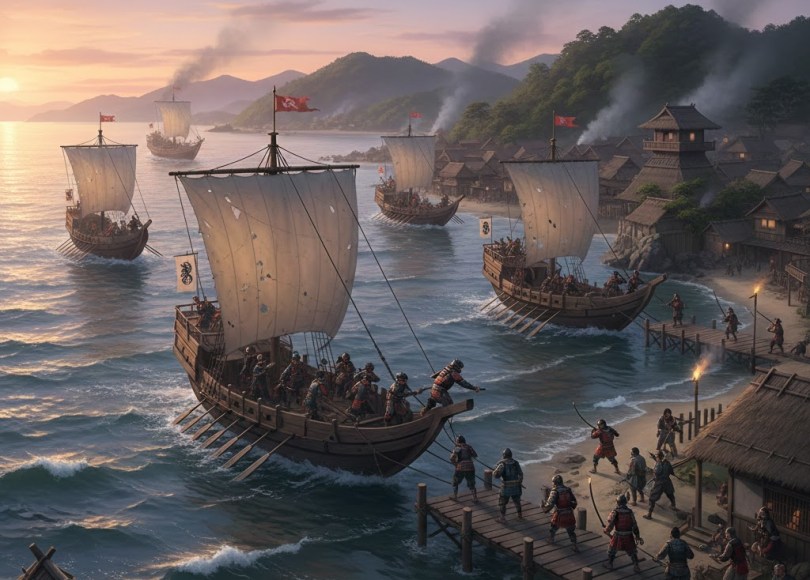
During the 14th and 15th centuries, Japan was in the period of the fall of the Kamakura Shogunate, and armed forces (Japanese pirates) were engaged in piracy, seeking the remnants of the wealth of the Mongolian period.
Goal of Action: To obtain rice and other daily necessities, humans
Area of activity: Southern coast of Goryeo (Joseon)
⇒ deep inland, Ming Dynasty coast ・・・ Alternating with Joseon
Base: Tsushima, Jeju Island
Size: ~3,000 soldiers / ~400 ships – large scale / with cavalry
Composition: Japanese (including people who spoke Japanese or wore Japanese clothes, people from Goryeo and Joseon) 10~20%, lowly people in coastal areas
[ Countermeasures ] Appeasement Measures by Joseon to subdue the Japanese pirates
(1) Japanese naturalized in Korea
Description: Offer government positions [ including residents of Japan / hospitality and trade rights ] ⇒ Entering the center of the Joseon government
Composition: People from Tsushima, Iki, Matsuura, etc
Response: Japanese were stationed in each distance state so that they could not cooperate
(2) Japanese tribute/private trader
Description: Recognized as authorized tribute traders / Recognized as authorized private commercial traders
Composition: Vassals of Western Japanese lords (pirate generals), etc.
・・・Tsushima So, Kyushu tandai Shibukawa, Hizen Matsuura clans, Chikuzen Munakata shrine, Satsuma Shimazu clans, etc.
Response: Opened 三浦(さんぽ) [富山浦(ふざんぽ)・乃而浦(ないじほ)・塩浦(えんぽ)] as open port sites ⇒ Japanese settlement
(3) remained as pirates
⇒ To mainland China
Countermeasures: “Tightening of coastal police and defenses / Diplomatic negotiations with Japan” by Ming Dynasty
NOTE: Both describe the early period of Japanese pirates. (14th – 15th century)
(Latter period is the 16th century)
Stu.
 Let's Dive into Japanese History
You must be logged in to post a comment.